An OEM with an installed base of thousands of industrial systems was losing roughly half of its service capacity to non-chargeable, reactive interventions. Rather than hiring more engineers, the organisation changed its service model: selecting the process data that actually predicts problems, diagnosing every request remotely through IXON Cloud before a travel decision, and eliminating recurring failure patterns at the source. The outcome was an approximately 50% reduction in service department strain, less travel and engineering capacity redirected to predictive maintenance and higher-value support.
The situation
An OEM with an installed base of thousands of industrial systems was experiencing sustained and growing pressure on its service department. The volume was not the only problem. Approximately half of all service requests were non-chargeable — meaning the organisation was investing engineering time and travel hours in interventions that generated no revenue and no structural improvement to the customer's operation.
The team was reactive by design: respond to the call, send an engineer, close the ticket. There was no capacity left for anything else.
The question
The organisation did not need more service engineers. It needed a different service model. The real question was: of all the requests coming in, which ones actually required a physical intervention — and which ones could be resolved, or prevented entirely, with better process visibility and faster engineering interpretation?
The ICE approach
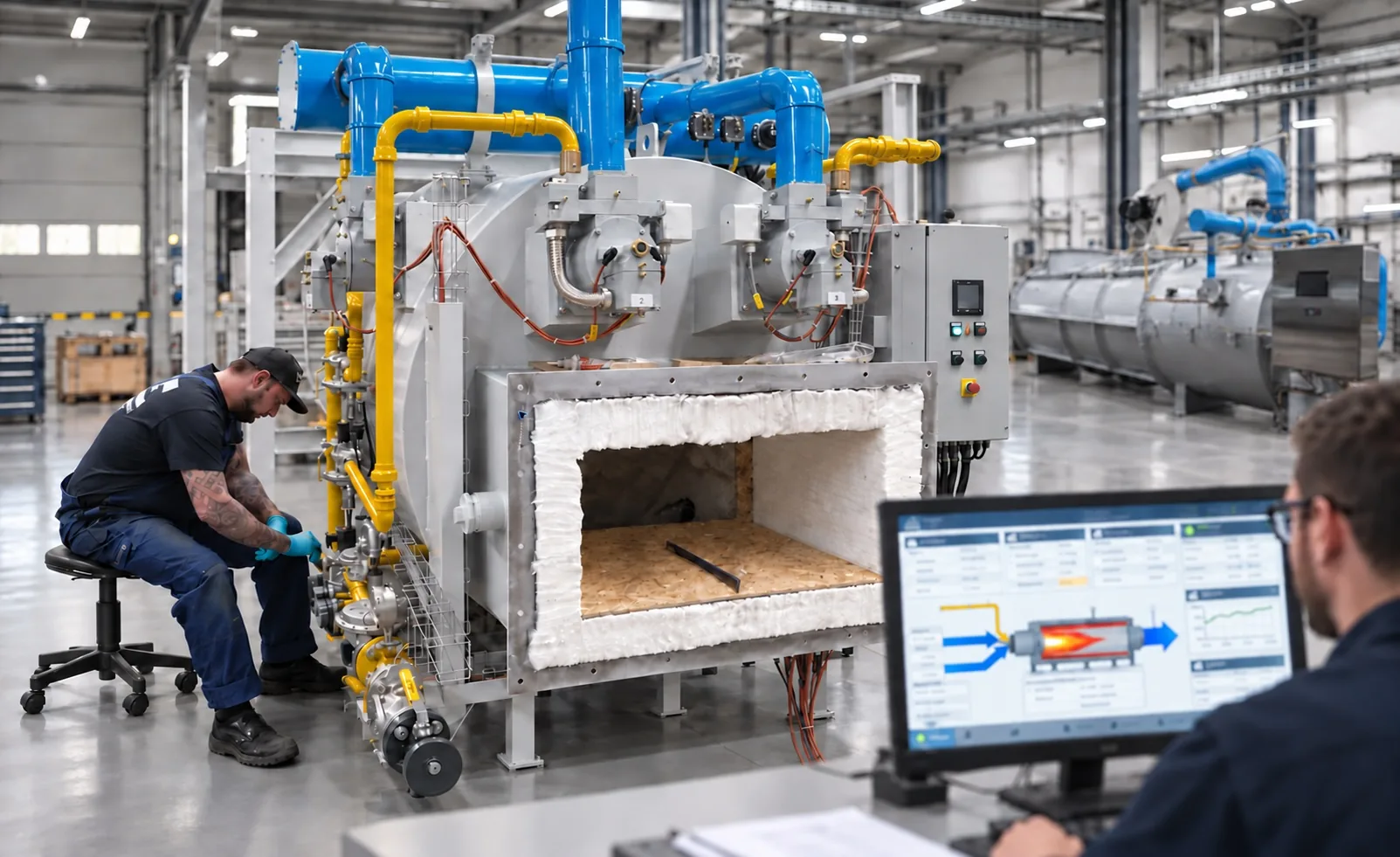
ICE Industrial Solutions worked with the organisation to establish what data from their installed systems was actually relevant, and how remote access through IXON Cloud could be used most effectively to act on it. The work focused on three things:
- Identify the parameters that genuinely predict issuesNot all data is equally useful. Identifying which process parameters were genuine early indicators of developing issues — and filtering out the rest — is the first step in making remote monitoring actionable.
- Diagnose remotely before any travel decisionA structured approach to remote diagnosis was established so that engineers could assess incoming requests remotely, determine which situations genuinely required a site visit and which could be resolved differently.
- Turn visibility into preventionThe visibility gained was used to identify recurring patterns — process conditions or equipment behaviours that consistently preceded failures — and to address them proactively rather than reactively.
The result
Approximately 50% reduction in service department strain. The team that had been overwhelmed by reactive requests gained back significant engineering capacity, which was redirected toward predictive maintenance, structural improvements to problematic installations, and higher-value technical support for end users.
- Travel was reduced.
- Non-chargeable interventions fell.
- The organisation moved from a service model built around reacting to failures toward one built around preventing them.
The broader lesson
This was not simply a remote access project. It demonstrated how the combination of connectivity, the right data selection and engineering experience can change the fundamental economics of an industrial service operation. Less unnecessary travel. Less low-value intervention. More engineering time applied where it creates real value — for the organisation and for its customers.
The technology made the connection possible. The experience made the connection useful.
How ICE keeps remote support secure and under your control
Remote access to an industrial installation is only acceptable when the plant owner decides who connects, when, and to what. ICE sets up remote support so that control stays on site. Several security options are possible, and they can be combined to match your IT policy:
- Outbound-only, encrypted connection — the on-site gateway initiates the VPN tunnel to IXON Cloud; no inbound ports are opened in your firewall.
- On-site consent — a physical key switch or an operator action is required before ICE can connect; the plant can end a session at any moment.
- Role-based access with two-factor authentication — only named ICE engineers, only to the devices and services you have released (HMI, PLC, monitoring), and with rights that can be limited to read-only.
- Full audit trail — every connection is logged with user, time and duration, so remote support is traceable for your own audits and for insurers.
- Network segmentation — the remote-access gateway sits on a separate network segment, isolated from your office IT.
Which combination is appropriate depends on your installation and your IT security policy; ICE aligns this with your IT department before the first connection is made.
Next: from remote support to unattended operation
Some installations may be suitable for operation with reduced — or even no permanent — on-site operator presence.
ICE can assess whether an existing installation is eligible for such an upgrade and identify the automation, monitoring, alarm management and safety measures required for reliable and compliant operation.
Frequently asked questions
How did the OEM reduce service department strain by 50% without hiring?
By changing the service model rather than adding engineers: identifying which process parameters were genuine early indicators of developing issues, assessing every incoming request remotely via IXON Cloud before any travel decision, and using the visibility gained to address recurring failure patterns proactively.
What is a non-chargeable service intervention?
A service call in which the OEM invests engineering time and travel hours but generates no revenue and no structural improvement for the customer — typically a reactive visit to an issue that could have been resolved or prevented remotely. Before this project approximately half of all service requests fell into that category.
What role did IXON Cloud play?
IXON Cloud provided secure remote access to the installed systems. It made the connection possible; the value came from selecting the right data, a structured remote-diagnosis process and the engineering experience to interpret what the data showed.
Is remote monitoring the same as predictive maintenance?
No. Remote monitoring gives visibility into the installed base. Predictive maintenance becomes possible when that visibility is filtered to the parameters that actually precede failures and interpreted by engineers who know the process.
Can ICE apply this approach to my installed base?
Yes. ICE works with OEMs and plant operators to determine which data from their thermal process and combustion installations is relevant, how remote access should be set up and how a remote-first service process can be structured. Contact us to discuss your situation.
Is your service department reactive by design?
Talk to our engineers about remote diagnosis and predictive maintenance for your installed base.