Catalytic Reduction (SCR)
Catalytic Reduction (SCR)
Advanced NOx reduction for cleaner industrial operations.
NOx emissions from industrial combustion processes are subject to increasingly stringent legislation. Failure to meet emission limits results in regulatory, financial and reputational damage and the pressure will only increase as environmental standards continue to tighten.
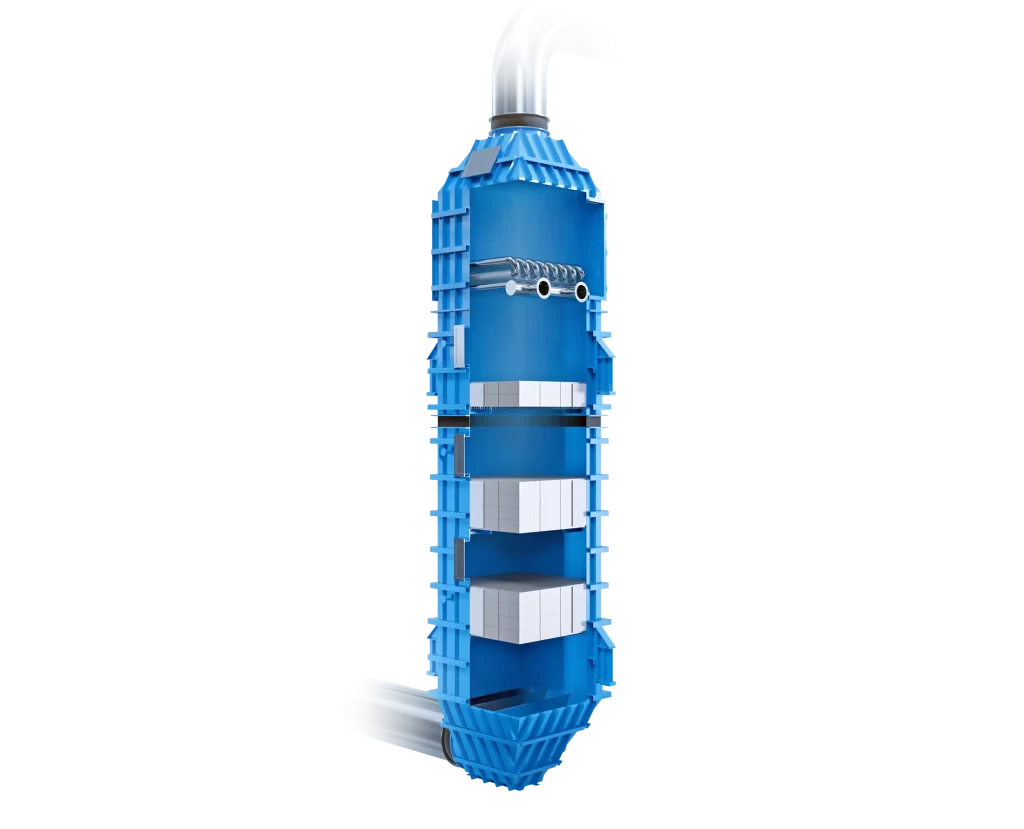
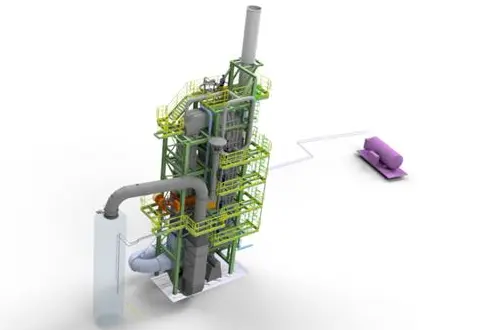
Selective catalytic reduction (SCR) is one of the most effective technologies for reducing NOx emissions from industrial combustion processes. ICE designs and integrates bespoke SCR systems that deliver maximum emission reduction without compromising operational efficiency, precisely matched to your process conditions and compliance requirements.
How it works
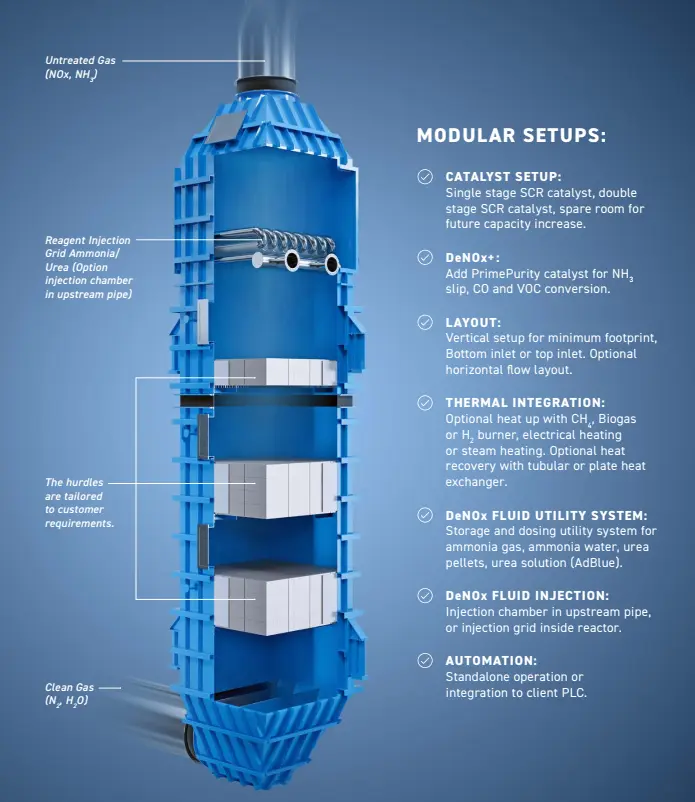
A reducing agent — typically ammonia (NH₃) or urea — is injected into the flue gas stream upstream of a catalyst bed. Within the catalyst, nitrogen oxides (NOx) are converted into harmless nitrogen gas (N₂) and water vapour (H₂O). This delivers high NOx removal efficiencies without the high process temperatures required by thermal reduction systems.
Performance depends on precise reagent dosing, correct catalyst selection, residence time and temperature control — all designed and optimised by ICE for your specific application.
Key benefits
- Exceptionally high NOx removal efficiencies that meet current and future environmental requirements.
- Energy-efficient operation at relatively low temperatures.
- Flexible integration into both new and existing process systems.
- Intelligent control with advanced monitoring and automation for optimal performance and minimal ammonia consumption.
- Long-term reliability thanks to industrial components and proven catalyst technologies.
Why ICE
Each SCR installation is designed specifically for your process. ICE manages the entire project lifecycle, from initial concept and detailed design through to installation and commissioning. In this way, we guarantee maximum environmental and economic performance throughout the entire operational lifecycle.
→ Talk to our engineers about NOx reduction for your installationCatalytic Reduction (SCR) in detail
Frequently asked questions
What is selective catalytic reduction (SCR)?
SCR converts NOx in flue gas into harmless nitrogen and water using a catalyst and a controlled ammonia or urea injection.
How much NOx can SCR remove?
A properly engineered SCR system reduces NOx emissions by up to 90% or more, with minimal ammonia consumption thanks to precise dosing control.
SCR or thermal oxidation — which do I need?
SCR targets NOx; thermal oxidisers target VOCs and CO. ICE engineers assess your emission profile and combine both where required.
Interested in catalytic reduction (scr) for your process?
Talk to our engineers — from a single component to a complete turnkey system.
Contact us